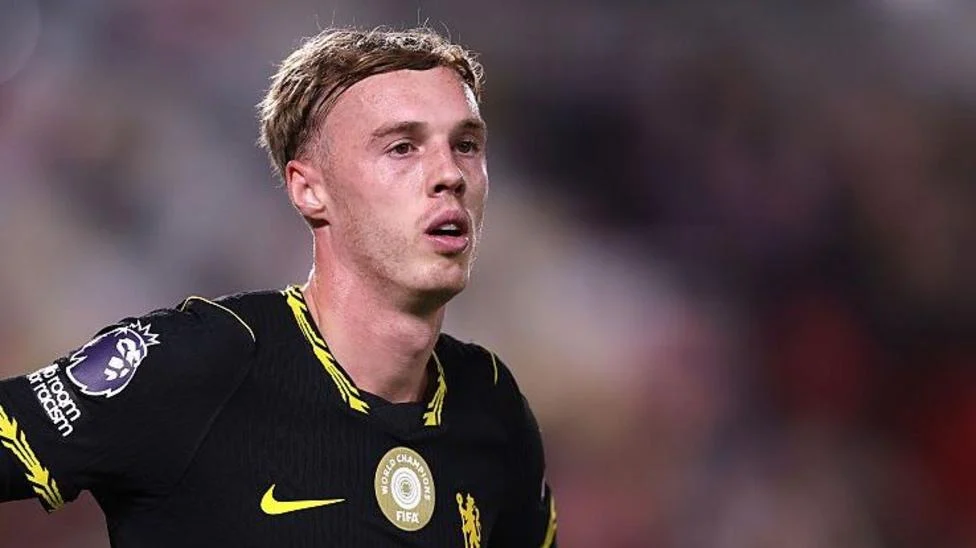
Professional Footballers’ Association (PFA) chief executive Maheta Molango has labeled the current football system as “sick” due to the excessive demands it places on players. Molango’s remarks came after Chelsea forward Cole Palmer’s recent withdrawal from the England squad, which he cited as an example of an unsustainable match calendar that has devolved into a “survival of the fittest” scenario. Saying: “They [England players] love to play for England, but Molango criticised that stance. But unfortunately your body puts a limit to it.
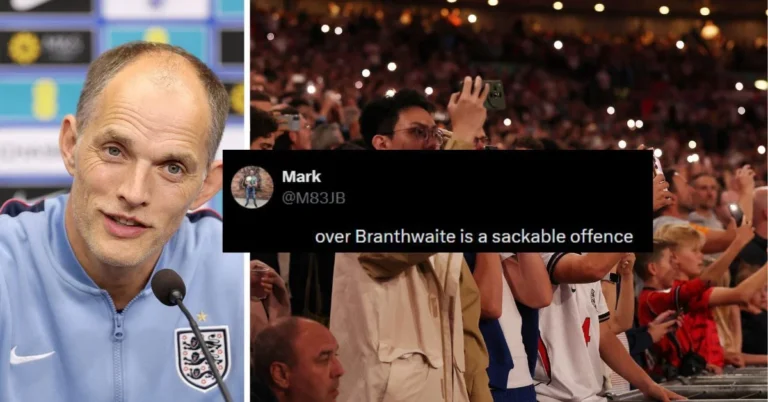
Speaking at the Fifpro performance summit in London, Molango highlighted that Palmer’s absence, alongside four other players—Marcus Rashford, Declan Rice, Kobbie Mainoo, and Tino Livramento—who also pulled out of Thomas Tuchel’s squad before the latest international window, should trigger “alarm bells.” He questioned the state of the industry when players, for whom national team call-ups are a source of immense pride, are forced to withdraw. You just ask yourself, what’s wrong about the industry, when England see five players who need to withdraw when the single most proud moment a player has is to be called up for the national team. He’s missing because he’s a victim of the calendar and that’s something that needs to absolutely trigger the alarm bells.
Molango specifically pointed to Palmer, noting that the player would have participated in four consecutive summers of football had he gone to the World Cup. He asserted that Palmer’s absence is a direct consequence of the demanding calendar.
The PFA and global players’ union Fifpro have consistently voiced concerns regarding the impact of an increasingly congested fixture list on player welfare. Molango criticized the notion that players “miss too many opportunities” by withdrawing, stating that while players love representing their national teams, their bodies have biological limits that cannot be ignored.
He emphasized that this issue extends beyond England players, citing recent withdrawals from other European teams, including Germany’s Kai Havertz, Dutch striker Brian Brobbey, and France captain Kylian Mbappe. Molango questioned whether this demanding environment represents the desired future for football, where players who inspire fans are unable to perform.
Molango described the system as “sick” and “ill,” suggesting it is driven by the pursuit of votes and power consolidation. To address these concerns, he advocates for a mandatory three-week summer break and an additional three-week “retraining” period each summer for players.
While Rebecca Caplehorn, the Premier League’s chief football officer, expressed conceptual support for such measures, she noted that their implementation is not currently feasible. Caplehorn explained that the existing calendar lacks the necessary space for a six-week break, and without regulatory changes, it remains impossible to deliver this desired gap. There’s always something that’s preventing us having that six-week gap that we want.