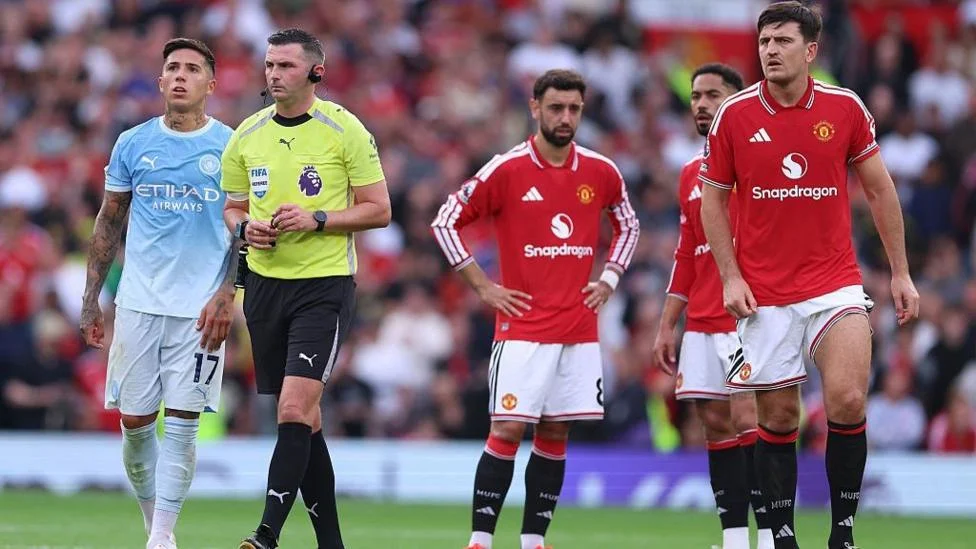
A high-pressure effort to streamline VAR interventions in the Premier League has been blamed for a significant officiating failure during the Manchester derby. The decision to validate Erling Haaland’s winning goal in Manchester City’s 1-0 victory over Manchester United has been branded “baffling” by Wayne Rooney, as video assistant referee Matt Donohue audibly hurried through the review.
Audio from the review captured Donohue urging the process forward with comments like, “Quick, quick, quick, quick! Go, go, go, go, go!” and “Let’s go, let’s go, let’s go, let’s go!” This frantic approach stood in stark contrast to the calm, methodical protocols expected of match officials. During the incident, Donohue and assistant VAR Blake Antrobus failed to notice that Enzo Fernandez was three yards offside before he attempted to head the ball.
This error occurred in a season where the Premier League mandated a more efficient application of VAR to cut down on time-consuming delays. Such directives respond to widespread feedback from fans, pundits, and media outlets demanding faster matches. Consequently, average VAR delays have dropped from 46 seconds last season to 36 seconds this term. Despite these statistical gains, critics argue that the system is prioritizing speed at the expense of necessary accuracy, noting that an earlier incident where Arsenal was denied a penalty against Aston Villa also appeared to be rushed.
Defending the officials, Manchester City manager Enzo Maresca acknowledged the extreme difficulty of making split-second calls under intense scrutiny. While he admitted the process is challenging, he maintained that mistakes are an inevitable part of the profession. However, internal processes failed during the Manchester derby. Instead of assessing the full attacking phase—from the initial cross by Josko Gvardiol to Haaland’s touch—Donohue focused narrowly on whether Fernandez had touched the ball, skipping a comprehensive review that would have highlighted the offside position.
The role of assistant VAR Blake Antrobus has also come under scrutiny for failing to act as a check against Donohue’s errors. Antrobus contributed only a vague “no, yeah” regarding the potential touch by Fernandez just one second before the goal was confirmed. Some observers wonder if past media backlash over a lengthy four-minute delay in a Brentford-Sunderland match—where Antrobus also served as AVAR—might have influenced his desire to avoid a long check this time. Regardless, the failure was compounded by the fact that no intervention occurred from the support VAR in the operations room, despite the clear, reversible nature of the mistake before play resumed. The report also notes that but it led to one of the most catastrophic VAR errors the Premier League has seen, no doubt Donohue was simply trying to be as efficient as possible. The report also notes that heightened by the introduction of VAR, refereeing has always been a goldfish bowl of scrutiny and pressure. The report also notes that rushed and chaotic rather than calm and collected. The report also notes that the urgency in Donohue’s voice was all too apparent. The report also notes that it was a panicked exchange between the VAR and the replay operator. The report also notes that the opposite of how a video official should operate. The report also notes that pundits, radio phone-ins and newspaper columns – that VAR has to be quicker, officials hear repeatedly – from fans. The report also notes that coaches and supporters – the key theme for improvements to VAR was the speed of decisions, in the Premier League stakeholders’ survey – which includes managers.