
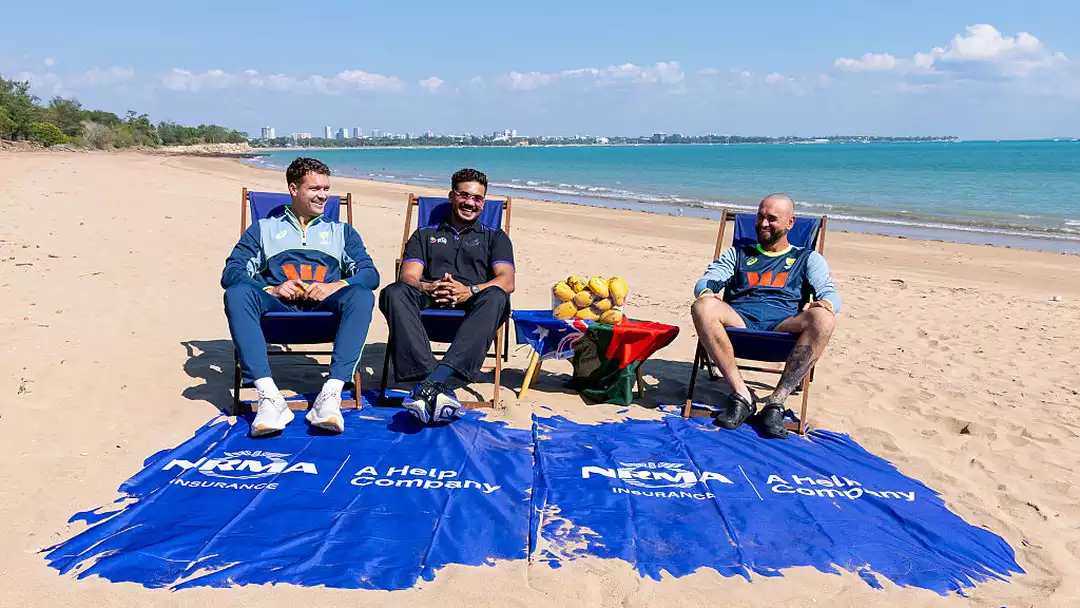
The return of Test cricket to Darwin has provided a unique homecoming for Jake Weatherald, who is set to become the first Darwin-born cricketer to play a Test match in his home city. The build-up has seen Weatherald balancing his duties as a player with those of a local ambassador, taking teammates fishing and exploring the scenic East Point Beach with Alex Carey and Bangladesh’s Taskin Ahmed. Amidst the preparations at Marrara Oval, Weatherald has been training alongside his former housemate, Justin Galeotti, a member of the ground staff who has recently excelled for the Southern Districts club. While Weatherald embraces the nostalgia of his childhood home, the rest of the Australian squad is stepping into unfamiliar territory as they prepare for an exceptionally demanding 12-month schedule.
Between August 13, 2026, and August 2, 2027, the Australian team is slated to play 20, or potentially 21, Test matches. This grueling itinerary involves traveling approximately 87,318 kilometers across four countries and 16 different venues. For the Pat Cummins-led side, this period represents a defining chapter for their collective legacy. Kicking off the campaign in the Northern Territory feels appropriate, as the team will need to channel a frontier spirit to conquer three of the most challenging environments in Test cricket: South Africa, India, and England.
The logistical isolation of Darwin—located at least a four-hour flight from Australia’s major coastal cities—serves as a reminder of the distance the team must cover. The region, known for its humid climate and ubiquitous “Crocodile Warnings,” offers a stark contrast to the southern hubs. Locals, many of whom have relocated from across the country, take immense pride in the unique character of the Northern Territory. This ambition to put Darwin on the map mirrors the goals of the Australian Test squad, who are striving to etch their names alongside the most legendary teams in the nation’s history.
To achieve this, Australia must navigate a series of high-stakes challenges, beginning with the upcoming Test against Bangladesh and followed by a series against New Zealand. The schedule also includes a special 150th-anniversary Test against England under lights in March. The team faces a significant historical hurdle: winning a Test series in India or England remains an elusive goal for Australia, with the drought in England dating back to 2001 and success in India remaining rare since 2004. Furthermore, Australia has not secured a series win in South Africa since the 2013-14 season, having toured there only once since that time.
Despite these challenges, the Australian side enters this period with a seasoned core, relying on the deep familiarity within the dressing room to provide stability. The team for the upcoming match against Bangladesh—Australia’s first home Test against the visitors in 23 years—is a full-strength selection. While some critics have questioned the decision to bypass younger prospects in favor of established veterans, the selectors have opted to commit to their mature core. With Cameron Green currently the only player under the age of 30, the team is effectively adopting a “now or never” approach to secure these final, elusive prizes.
The strategy reflects a belief that this specific group of players, including Cummins, Travis Head, and Marnus Labuschagne, is making a final, concerted push for greatness. By keeping the squad together, the management hopes to capitalize on the existing chemistry and experience to navigate the arduous year ahead. As the team prepares for the opening Test this Thursday, the focus remains entirely on executing a campaign that could define the legacy of a generation.
While Galeotti carefully manoeuvred the roller over the 22 yards that had led to a bit of consternation amongst the Aussie batters previously.
And his beloved “territorians” as he refers to them.
While Weatherald soaks in the nostalgia and the home comforts, this couldn’t be a more unfamiliar setting for the rest of his team, most of them anyway, to embark on an incredibly arduous 12-month ride.
It couldn’t have felt more like a homecoming in that moment.
And in the adjoining net, his former housemate Justin Galeotti, sat on top of the heavy roller making sure the few divots on the pitch were being sorted out.
The two didn’t communicate and barely even made eye contact.
They instead stuck to their respective tasks diligently.
Weatherald tackling some throwdowns and the local spinners from his relatively different upright stance at the crease.
The two had shared a house in Hobart during Weatherald’s time playing for Tasmania in the Sheffield Shield and also donned the colours of Darwin CC as teammates last year.
He’s even found time to duck out and see Galeotti smash the third of his troika of centuries.
Because they’ll need all the frontier spirit that can be mustered to overcome three of the biggest obstacle courses in Test cricket.
Just to emphasise how far away we are from the more populous eastern, western and southern coasts, it takes you a minimum of four hours to fly to the Top End from wherever you are in the country.
Even Brisbane’s nearly a 3-hour flight from here.
So much so that it’s got its own climate in terms of being hot and humid throughout the year, except during the wild wet season.
And the people here, many of whom have moved from different parts of the country, take great pride in the singularity of their territory, even the multiple boards around the coast with “Crocodile Warnings”.
“Darwin is where you’ll find the mythical version of Australia that everyone always raves about.
But there is also a change coming through, where a lot of people here finally want to put our great city on the map,” says one local, who’s called Darwin home for 42 years.
It kind of resonates with what Cummins and his crew are setting out to do as well, with a slight twist.
The last time Australia won in South Africa by the way was 2013-14 though they’ve made only one Test tour there ever since.
While they have retained the Ashes on back-to-back tours to England in the last seven years, the series-win drought goes back to 2001, when Steve Waugh’s team were at their ultimate peak, even if they had failed to breach what he famously called the Final Frontier in India.
And here are a seasoned Australian team with a lot of experience in their ranks on the cusp of going even further than their celebrated predecessors did at their prime.
Their biggest strength being the familiarity within the dressing-room that breeds both content and context to what lies ahead.
There has been a bit of criticism around the selectors’ decision to not try out any future prospects in this two-match series, even if only in the reserves.