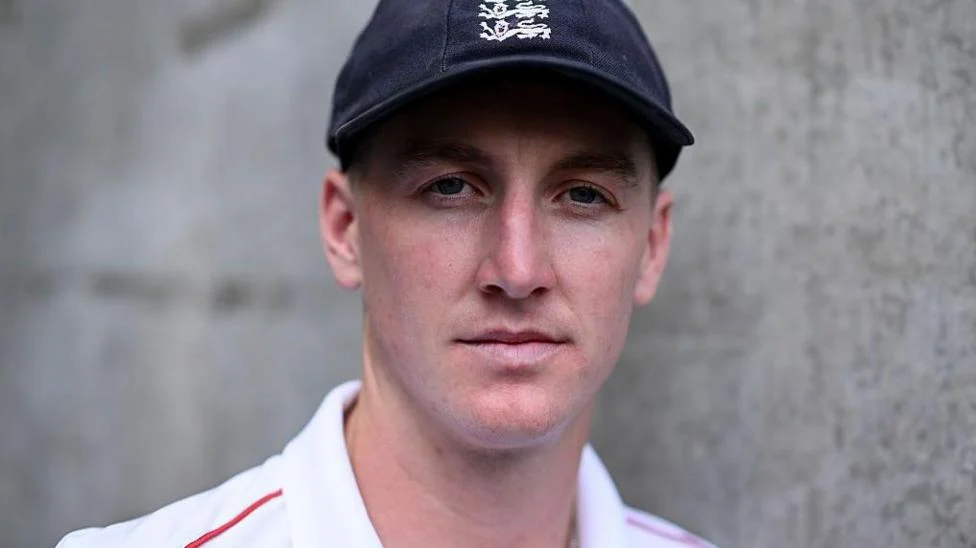
Harry Brook’s composed 91-run innings on day two of the first Test against Pakistan at Headingley marks a significant turning point in his career. The “hometown boy” reached his half-century with ease, scoring his 91 runs from just 93 balls without the reckless aggression that characterized his previous performances. By avoiding the wild swipes seen during England’s Ashes defeat last winter, Brook demonstrated a level of concentration and restraint that should serve as his blueprint for future Test matches.
This shift in approach follows his recent disappointment in being overlooked for the England Test captaincy. Managing director Rob Key and the England and Wales Cricket Board had seriously considered him for the role, but ultimately decided he was not yet ready. While Brook has proven himself as a capable leader in white-ball cricket, concerns regarding his maturity—stemming from past media comments and incidents like the one in Wellington—led the hierarchy to appoint Joe Root instead.
The current leadership structure is viewed as a temporary measure, with Root’s second stint likely concluding after next year’s Ashes. The responsibility now lies with Brook to prove he is the primary candidate to succeed Root. While emerging talents like Jacob Bethell are also highly regarded for their leadership potential, Brook can solidify his case by maintaining the maturity and tactical discipline he displayed at Headingley.
Some observers may argue that this measured performance highlights the frustration of his earlier, more erratic displays. However, the focus must now shift toward the future. The team has learned from the disappointments of the past winter, and with new figures like Stephen Fleming involved, the side is moving toward a more astute operational style. This evolution is essential as England prepares for a winter tour of South Africa and the upcoming Ashes series.
England currently holds a commanding 185-run lead heading into day three, putting them in an ideal position to secure a 1-0 series lead. The team’s performance has been bolstered by Jordan Cox, who contributed a classy 73 before falling to spinner Usman Ali, and the steady presence of Joe Root. While the team aims to retain the positive spirit of the “Bazball” era, they are clearly working to shed the inflexibility and recklessness that previously hindered their progress.
Pakistan’s selection strategy has also played into England’s hands, as the tourists are noticeably missing pace in their bowling attack. By failing to include an additional seamer, Pakistan has provided England with the perfect opponent to begin their long-awaited reset. For Brook, the challenge is to continue this trajectory, proving that he can balance his rare, world-class talent with the temperament required to lead his country in the future. The report also notes that he stroked 91 runs from 93 balls without breaking sweat on day two of the first Test against Pakistan, after the thrilling highs and frustrating lows of the past four years and 38 Tests. The report also notes that not once did he come charging down the pitch. The report also notes that he will score a million runs if he keeps batting like this. The report also notes that or because I did not rate him as a batsman, any frustration I have ever expressed towards Brook has never been personal. The report also notes that he is a very rare talent who ranks alongside the likes of Kevin Pietersen and David Gower as the most talented I have seen play for England. The report also notes that when he got out driving Scott Boland in Perth or swinging at Mitchell Starc in Brisbane, I feared he could waste what he has worked so hard to have, but in Australia. The report also notes that that role is about more than purely the decisions made on the field.