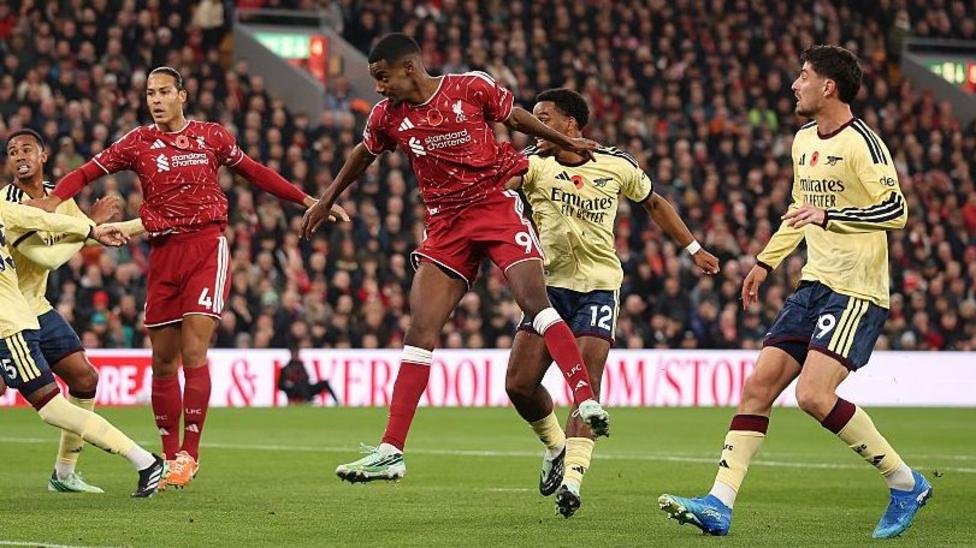
A controversial incident in Liverpool’s 1-0 defeat against Arsenal at Anfield on Sunday has reignited the debate over whether players must exaggerate contact to gain VAR interventions. There is now a greater focus on players who dive or embellish contact to ‘win’ penalties. Say, a handball, and we’ve seen plenty of surprise interventions where no player has asked for.
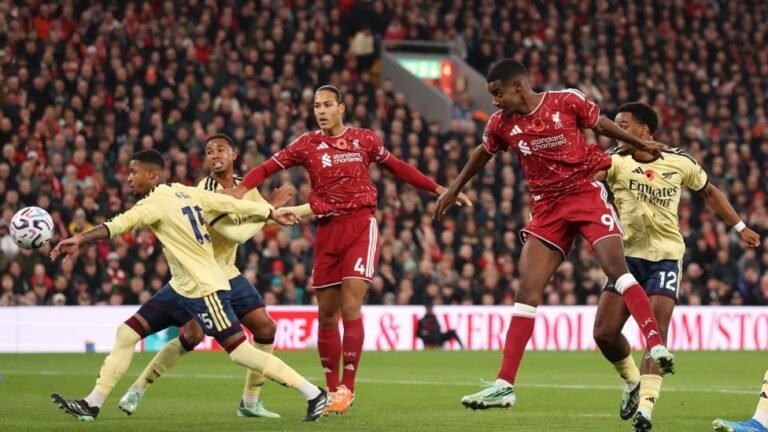
Liverpool striker Alexander Isak failed to connect with a cross delivered into the penalty area by Bradley Barcola.
Replays revealed that Arsenal defender Jurrien Timber grabbed Isak’s shirt, but the Sweden international made no appeal and simply turned back up the pitch for the goal-kick. And it drifted out of play, the Sweden international just failed to get his head on the ball.
Referee Andy Madley took no action on the pitch, and video assistant referee (VAR) Stuart Attwell decided against initiating a review. Liverpool ended the match without a single shot on target, as Arsenal secured a rare away victory to move clear at the top of the table.
Following the match, Liverpool manager Andoni Iraola expressed sharp frustration over the unpunished incident. “There is a clear grab of the shirt,” Iraola insisted after the defeat. “The answer is you have to dive, if you don’t dive they won’t call it. If he goes to the floor, they call the penalty 100%. It shouldn’t be like this but it is what it is.” Iraola clearly will not share that sentiment today.
Former Premier League player Danny Murphy agreed on Match of the Day that Arsenal had escaped a spot-kick, noting, “Arsenal got lucky. If Isak maybe makes a bit more of it. I hate to see players exaggerate, but he’s going to score. It’s a big moment in the game.” Rather than outright diving, analysts suggested Isak needed to give the officiating team a reason to make a decision.
The incident highlighted a stark contrast within the same match when Alexis Mac Allister was involved in a second-half clash. Pundit Jamie Carragher labelled Mac Allister “embarrassing” for throwing himself to the turf while claiming he had been headbutted by Noni Madueke. The determination is always about how it affects the opponent.
Similar shirt-pulling incidents have yielded vastly different outcomes under VAR scrutiny this season.
In a February encounter between Sunderland and Fulham, referee Craig Pawson initially missed a shirt pull by Brian Brobbey on Calvin Bassey. Who punches it to safety, the ball flies through to Sunderland goalkeeper Robin Roefs. Of course, as we saw with Bassey, the Spaniard’s comments are largely true.
However, after Bassey immediately fell to the ground and appealed with arms outstretched, VAR official Tony Harrington advised Pawson to check the pitchside monitor, resulting in a penalty award.
Key Officiating Principles & VAR Guidelines
- Rule on holdingA holding offence occurs only when a player’s contact with an opponent’s body or equipment impedes the opponent’s movement.
- Visual thresholdThe ‘coat hanger effect’, where a player’s shirt is visibly pulled away from the body, is far more likely to be penalised by officials.
- Factor of appealFormer Premier League assistant referee Darren Cann said Sport that holding must be sustained, adding it was notable that Isak did not appeal.
- Full-speed vs slow-motionOfficials note that shirt grabs often appear minimal at full speed, creating frustration when slow-motion replays are used to build a case for prosecution.
- Intervention trendsFollowing UEFA referees’ chief Roberto Rosetti’s summer warning against over-reviewing, the Premier League has recorded just 14 subjective VAR reviews after nine rounds—identical to last season’s low total.
The Key Match Incidents Panel has recorded only one missed VAR intervention in the Premier League so far this season, allowing video officials to argue that the high threshold for review is being maintained effectively. Which is probably why the number of subjective reviews (14) is exactly the same as last season after nine rounds, the number of interventions in the Premier League has historically been the lowest in Europe.
However, with minimal contact and no physical appeal from Isak, the incident was treated as an on-field judgment call rather than a clear and obvious error suitable for VAR correction—a outcome Iraola remains firmly unhappy with. A small amount of contact with no appeal is unlikely to lead to a review, and with the high bar.
Important Details
- Still, impact is crucial. And if Isak gives the impression there has been no impact, that is going to be a factor.
- There is some annoyance in refereeing circles that the goalposts keep being moved when analysing decisions.