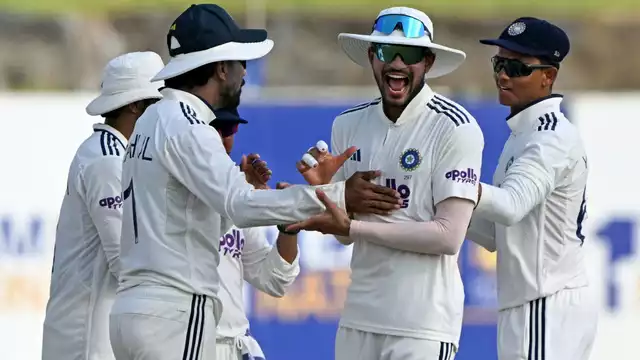
The second Test between Sri Lanka and India, scheduled for August 23-27, 2026, moves to the Sinhalese Sports Club (SSC) in Colombo. Unlike the scenic coastal backdrop of Galle, the SSC venue is defined by its urban surroundings, highlighted by the 350-meter-tall Colombo Lotus Tower, a structure that reflects the city’s modern architectural aspirations. The stadium retains a traditional feel with its two-tier stands and manual scoreboard, marking the 47th Test match held at this historic ground—the second-highest tally for an Asian venue, trailing only Galle, which reached 50 last week.
History suggests that patience will be a key factor at the SSC, where 14 matches have ended in draws, doubling the frequency seen at Galle. While the heat is expected to be taxing, India enters the contest with confidence after maintaining control throughout the series opener. Head coach Gary Kirsten, while optimistic about the state of Test cricket in the region, remains focused on the immediate task rather than long-term World Test Championship projections. “Anything is possible, but we need to win matches,” Kirsten noted, emphasizing the need for consistency during this demanding period of the format.
India’s captain, Shubman Gill, is looking to maintain that disciplined approach. Despite home losses to South Africa late last year, the team has shown resilience by attacking when necessary and tightening their defense under pressure. Since his debut in July 2023, opener Yashasvi Jaiswal has been a standout performer, trailing only Joe Root in total Test runs scored during that timeframe. India currently holds a 3-2 head-to-head record against Sri Lanka at the SSC, with four previous encounters resulting in draws.
Conditions at the SSC typically favor batting, with teams often opting to post large totals after winning the toss, though bowlers may face significant fatigue. Forecasts indicate a possibility of rain throughout the five-day duration of the match. Spinners have historically found success here, claiming 45 wickets in the last three Tests, which is 10 more than the pace bowlers.
Sri Lanka has made adjustments to their lineup, with Kamil Mishara set to replace the dropped Nishan Madhushka as an opener. Captain Dhananjaya de Silva highlighted the need for left-right batting combinations, welcoming the addition of left-handers like Mishara and the potential inclusion of Sahan Arachchige. Arachchige, who scored 72 and 127 in unofficial Tests against India A, is competing for a spot, though Pasindu Sooriyabandara is expected to retain his position at No. 3. The middle-order core remains set with Kamindu Mendis, Dhananjaya de Silva, and Sonal Dinusha.
For India, the potential inclusion of off-spinner Saransh Jain is being considered to counter Sri Lanka’s left-handed heavy batting order. Jain was active in the nets alongside the squad, while Kuldeep Yadav missed training sessions on the eve of the match. Gautam Gambhir recently praised the contributions of newcomers Devdutt Padikkal and Manav Suthar, noting that while their immediate impact was satisfying, the team remains committed to long-term development.
Dhananjaya de Silva acknowledged the disparity in the first Test, specifically regarding the effectiveness of the new ball. “In the first Test the difference was the wickets you could take with the new ball. We lost four wickets in the first innings, but we were only able to get two of their wickets with the new ball. That was the big difference,” he explained, noting that the team is training specifically to address this tactical gap.
Probable Sri Lanka XI: Kamil Mishara, Lahiru Udara, Pasindu Sooriyabandara, Kamindu Mendis, Dhananjaya de Silva, Sonal Dinusha, Niroshan Dickwella, Keshara Nuwantha, Prabath Jayasuriya, Lahiru Kumara, Asitha Fernando.
Probable India XI: Yashasvi Jaiswal, KL Rahul, Devdutt Padikkal, Shubman Gill, Dhruv Jurel Jurel, Rishabh Pant, Ravindra Jadeja, Manav Suthar, Kuldeep Yadav/Saransh Jain, Mohammed Siraj, Prasidh Krishna. The report also notes that it is perhaps the symbol of the city’s modern architectural ambitions, standing 350m tall. The report also notes that the India Test will be #47 here – the second-most at an Asian venue after Galle hit 50 last week. The report also notes that there’s another distinction between the two venues that will interest both teams: There have been twice the number of drawn Tests at SSC (14). The report also notes that nor ocean waves to catch a glimpse of, there is no fort overlooking the Sinhalese Sports Club. The report also notes that skyscrapers stretching as far as the eye can see beyond the stadium, and the unmissable Colombo Lotus Tower, shaped like a stem with a lotus bud on top, this venue has floodlights. The report also notes that but it isn’t all concrete jungle at the stadium. The report also notes that some of the charm of the grass banks remains, and there is still a towering manual scoreboard, serving a reminder of a slightly different era, the stands rise no more than two tiers.