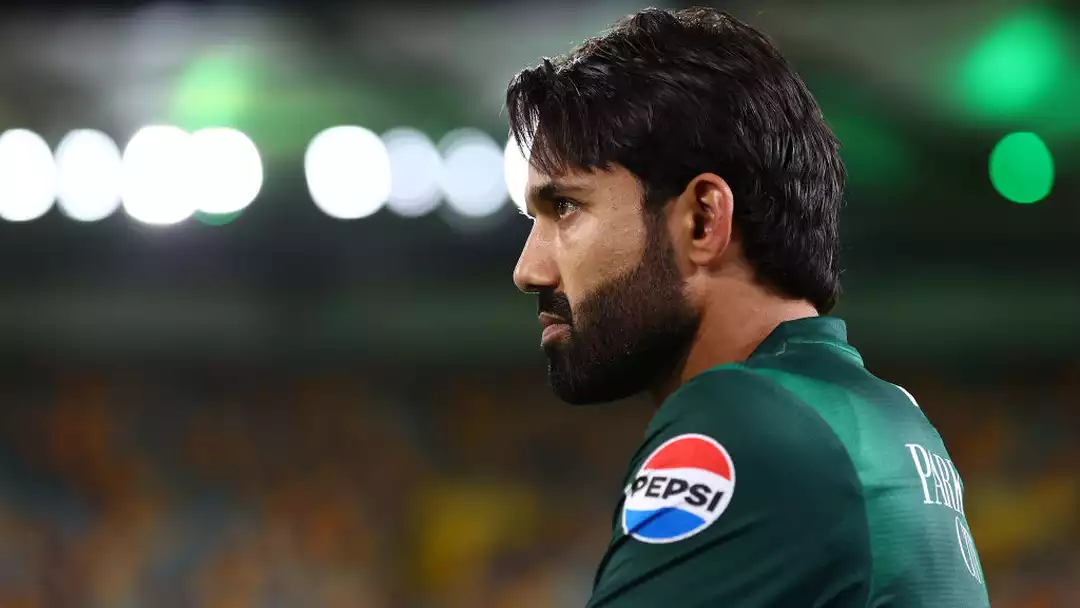
Former Pakistan captain Mohammad Rizwan is facing a confusing legal situation following a midnight interrogation and the confiscation of his mobile phone by authorities. The veteran cricketer, who has played 256 international matches for his country, including 47 Tests, 103 ODIs, and 106 T20Is, has expressed significant frustration over the lack of transparency surrounding the probe. Rizwan has stated that he remains unaware of the specific allegations against him or who leveled the charges. Mohammad Rizwan may be experiencing Kafkaesque predicament.
The incident occurred in London at approximately 1:00 a.m. on August 30, immediately following the conclusion of the Lord’s Test match against England. Rizwan was reportedly woken up in his hotel room and instructed to come down to the lobby by a Pakistan Cricket Board (PCB) anti-corruption official, Col. Akhtar, with a specific order to bring his mobile phone. Upon arriving in the lobby, Rizwan found a representative from Pakistan’s Federal Investigation Agency (FIA) waiting for him. But, yes, it is under the Ministry of Interior, headed by Mohsin Naqvi, who is of course, the chairman of the Pakistan Cricket Board (PCB). Accessed by. “Immediately after the Lords Test Match held between England and Pakistan on 27.08.2026 to 30.08.2026, the Petitioner was summoned to the lobby of the hotel where the entire team was staying at 01:00 AM in the night, he recounted the incident in his appeal before the court. There, an officer purportedly from some government agency was present.
Despite his initial hesitation, a team official advised Rizwan to cooperate. During the meeting, he was questioned about betting and online gambling. His mobile phone was then seized, despite his resistance and the absence of any formal documentation. Rizwan noted in his court appeal that he was provided with ‘no written notice, no written demand, no allegation, no charge, no warrant, no receipt and no document explaining the basis on which the phone was being taken away.’ Online gambling before the handset was seized, in spite of his steadfast resistance, rizwan was confronted with a barrage of questions relating to betting.
According to Rizwan’s account of the night, he handed over the device only after receiving assurances that it would be checked and returned within three hours. However, the phone remains in the custody of the National Cyber Crime Investigation Agency (NCCIA). The cricketer has since filed a petition with the Lahore High Court, alleging intimidation, blackmail, and harassment by those conducting the investigation. “Needless to mention that the Petitioner (Rizwan) handed over his phone on the assurance that the device would be thoroughly checked and returned back to him within the next 3 hours.
The circumstances have drawn comparisons to the 2010 spot-fixing scandal, which also involved a Test match at Lord’s between England and Pakistan. However, legal experts like Taffazul Rizvi suggest such comparisons are premature. Rizvi noted that ‘only after the inquiry is concluded will the true picture emerge.’ He also clarified that international regulations, such as Article 1.11 of the ICC Anti-Corruption Code, generally require players to comply with the domestic laws of their home countries.
Rizwan maintains that there is no evidence of corruption. He argued in his petition that the ICC Anti-Corruption Unit (ACU) is the proper body to handle allegations of spot-fixing or betting in international cricket, yet no reference regarding his conduct has been made to the ICC. The PCB has remained vague on the matter, stating only that an internal inquiry is following standard procedures and regulations.
Following the seizure of his phone in London, Rizwan and teammate Imam-ul-Haq were directed to return to Pakistan on the next available flight. Since his return, Rizwan has been summoned by the NCCIA and asked to provide detailed information regarding his financial assets and bank accounts. Despite this cooperation, his mobile device has not been returned.
The ongoing investigation has already impacted Rizwan’s professional commitments. He was barred from participating in the President’s Trophy Grade 1 First Class tournament, an event that featured most other players who had returned from the UK tour. Rizwan has clarified that his legal action is not a complaint against the PCB, the FIA, or the state of Pakistan, but rather a move to protect his reputation and seek procedural fairness.
In a recent ruling, the Lahore High Court declined to provide immediate relief or stop the investigation. The court stated, ‘At this stage, the Court considers it appropriate to exercise caution and permit the competent agency to proceed with the inquiry.’ The court noted that currently, only a notice and a questionnaire have been issued to the player.
Rizwan continues to seek answers regarding the legal authority under which his personal property was seized and why he has been subjected to what he describes as a vague and unjustified process. As the NCCIA continues its work, the cricket community awaits further clarity on a case that has left one of Pakistan’s most experienced players in a state of professional and legal uncertainty.