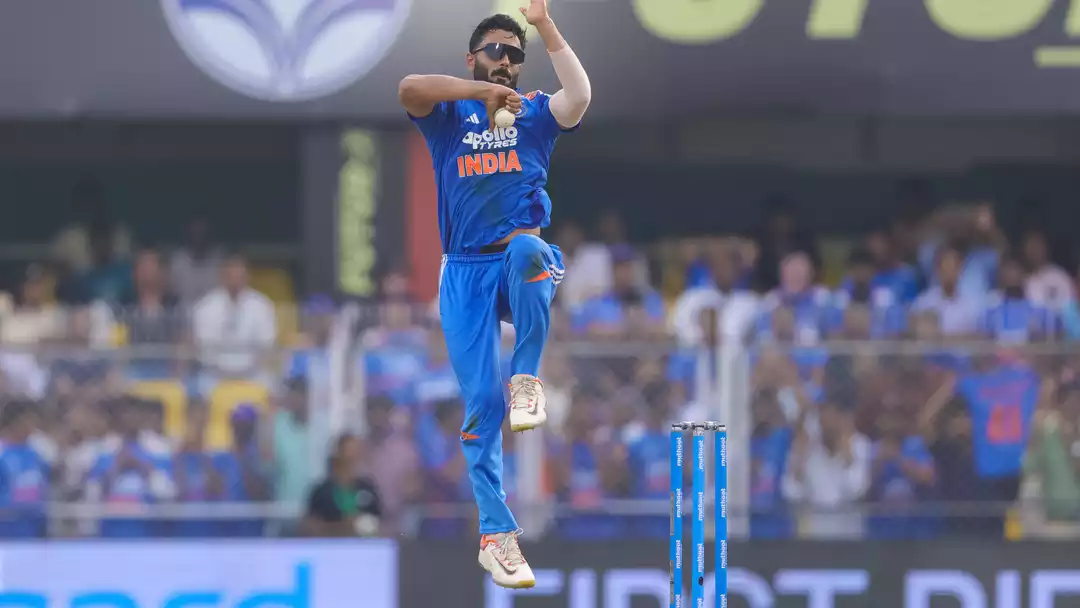
The T20I series against the West Indies served as a critical testing ground for India’s bench strength. While players like Mayank Yadav and Prince Yadav garnered attention for their bowling, Naman Dhir emerged as the most compelling discovery across formats. Although his reputation was built on his batting power, the series highlighted his off-spin as a versatile and unexpected tactical asset for the team. Until then, it had been his off spin, a work in progress, that had made the stronger impression. He has bowled regularly in other tournaments, while the IPL has made his bowling skills largely redundant.
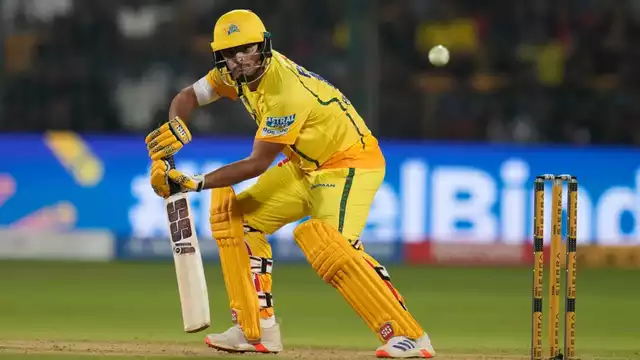
In the nine-overs-per-side clash in Bengaluru, India reached 88/4 when Dhir entered the crease, batting ahead of the more established Shivam Dube. Despite limited opportunities earlier in the tour, he immediately demonstrated his composure. He hit Keemo Paul’s off-pace delivery over deep mid-wicket and subsequently punished a wide delivery, using his height and a high bat grip to strike a boundary. After Paul delivered a 140 kph wide, Dhir hammered a 137 kph ball over long-off. By the end of his six-ball cameo, he had contributed 24 runs, including three sixes, providing a vital injection of momentum. India were 88/4 in the nine-overs a side contest with 17 balls remaining when Dhir walked out ahead of the more established Shivam Dube. That was 10 off two balls. And they bowled much more dots,” he said. Not going for too many runs by the boundary routes.
His bowling contributions were equally significant throughout the series. During the preceding ODI leg, Dhir maintained an economy rate of 6.30 across 16.3 overs, ranking as the third-most efficient bowler behind Kuldeep Yadav and Matthew Forde. Even on surfaces that provided little help to spinners, Dhir displayed a resilient mindset. Although he conceded 12 sixes during the T20Is—the second-most in the series—he frequently responded by taking a wicket on the very next delivery, a pattern he repeated five times. Where spinners conceded at 6.55 runs per over, Dhir’s 16.3 overs went at 6.30, the third-best economy rate across teams, behind Kuldeep Yadav (5.56) and Matthew Forde (5.90), in the preceding ODI leg. On pitches that offered little assistance to spinners, Dhir’s response to being hit stood out. While Kuldeep and Axar Patel conceded 15 and 18 respectively on either side of it, his first over cost just six runs.
West Indies coach Daren Sammy noted the intelligence behind this approach, stating that the key to playing on good wickets is avoiding boundary-heavy bowling. Dhir finished the series with a dot-ball percentage of 35, trailing only Mayank Yadav’s 43.3%. His variety was particularly evident during his T20I debut in Lucknow, where he adjusted his pace between the low 80s and high 90s kph. In that match, he claimed the wicket of Shai Hope by taking 5 kph off a length ball to induce a catch, and later dismissed Romario Shepherd by slowing down to 85 kph. And during India’s 46-ball innings, the West Indies seamers found that anything fuller got hit, while anything back of a length and straighter did damage, steady rain had kept the Bengaluru pitch under covers. Shamar Joseph’s off-pace ball into the pitch had Ishan Kishan mistiming to mid-on, Shamar Springer seamed one back to bowl Sanju Samson, and Shreyas Iyer miscued a pull. But Springer – the best bowler of the night – erred in line and length, delivering a fuller delivery outside off with mid-off inside the circle, west Indies were protecting the boundaries in front of the square on a slower surface. Against the tournament average of 27.7%, chase had the best economy rate at 9.06 and a boundary percentage of 19.1. Another player with similar skill set, dhir was brought into the T20I side at the last minute in place of Washington Sundar. However, Dhir showed a wider range of pace than Sundar, whose deliveries generally sit in the mid-90s to 100-plus kph range, with the ball. After Hope hit a 94 kph length ball over deep mid-wicket, Dhir went slightly wider and took five kph off his pace, allowing the ball to turn into the right-hander. He was introduced in the ninth over after Shai Hope and Sherfane Rutherford had rebuilt following an early collapse. He brought his speed down to 85 kph and generated 2.93 degrees of drift away from the right-hander, to induce a miscue to long off having been hit over the square-leg boundary off the previous ball down the leg side, against Romario Shepherd. His final wicket that night, Springer, came through a change of angle from around the wicket to over it, denying the batter the chance to get underneath the ball for elevation.
Dhir’s capacity to adjust his game under pressure earned him accolades from teammates and leadership. Shreyas Iyer lauded his attitude in crucial moments, particularly his ability to identify when the ball was turning and capitalize on the conditions. Similarly, Tilak Varma highlighted Dhir’s willingness to challenge the West Indies’ power hitters as a major positive for the side. This confidence was not accidental; Dhir had prepared extensively at the Reliance Corporate Park in Navi Mumbai, logging hundreds of overs in the nets before joining the national squad.
Dhir’s effectiveness at the 80–90 kph range accounted for four of his five series wickets, a stark contrast to more senior bowlers like Axar Patel, who often increased speed when under attack.
Dhir’s bowling, while still evolving, provides a necessary secondary skill. His primary value, however, remains his ability to strike the ball cleanly at the death. As Shivam Dube and Axar Patel have faced challenges as finishers and Hardik Pandya’s performance statistics have dipped, Dhir’s capacity to handle various pace and length combinations presents a potential long-term solution for India’s lower middle order.
Looking ahead, Dhir has expressed his clear focus on his development. During the Hyderabad T20I, he emphasized his ambition, stating that while he aspires to be a genuine all-rounder, he currently prioritizes his batting contribution. His performance against the West Indies has successfully placed him as a key figure in India’s tactical plans for the future.