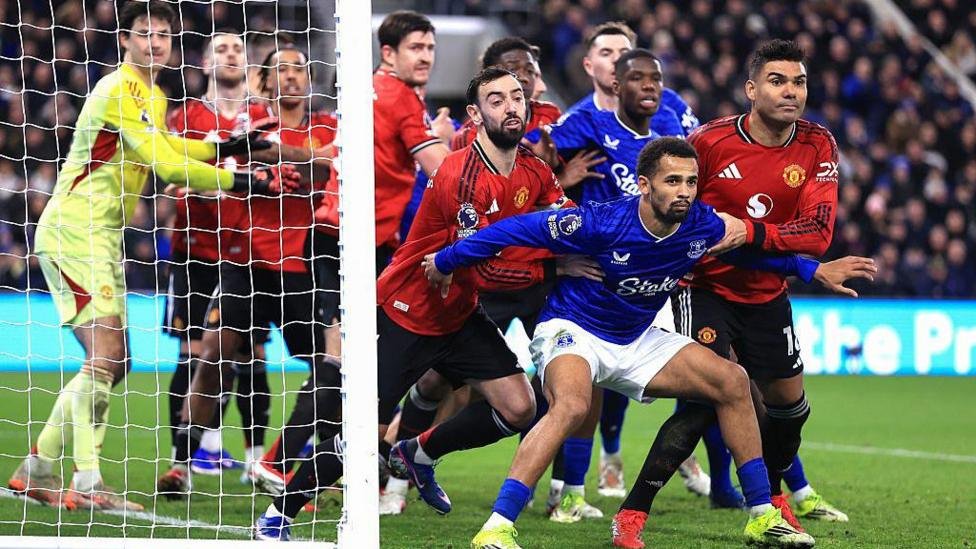
The Premier League is moving to curb the rise of physical misconduct inside the penalty area, with referees instructed to adopt a more proactive stance against holding, pushing, and grappling during set-pieces. This initiative follows a season where such incidents became a recurring issue, notably during a fractious match between Everton and Manchester United in February. Reflecting on that game, Everton manager David Moyes expressed frustration, stating, “You get the feeling now that referees really don’t want to get involved in any of it. It’s really poor that they’ve not tried to deal with it.”
The issue gained further prominence following a controversial disallowed goal for West Ham against Arsenal in May, which involved multiple simultaneous fouls. These concerns were central to discussions held over the summer between club captains, coaches, and match officials. As the new season kicks off with champions Arsenal hosting Coventry, referees have been directed to be more decisive in penalizing actions that lack a genuine footballing purpose.
While the fundamental laws of the game remain unchanged, the officiating focus has shifted toward player conduct. Officials across the Premier League, the English Football League, and the Women’s Super League will prioritize holding actions that have a clear material impact on play. Data from last season highlights the necessity of this shift; of the 20 missed VAR interventions, a quarter involved penalties that were not awarded when players were wrestled to the ground away from the ball.
Referees are now encouraged to penalize specific non-footballing behaviors, such as when a player ignores the ball entirely to focus solely on an opponent, makes no attempt to challenge for the ball, or engages in sustained, impactful holding of an opponent or their clothing. Defenders who position themselves with their backs to the ball purely to impede an attacker’s movement will face stricter scrutiny.
Howard Webb, the Premier League’s referees’ chief, emphasized the need for officials to act with greater confidence. “We’re trying to get the officials to be as confident as they can be to penalise what they see,” Webb explained. He noted that the goal is to see fewer warnings and more direct action, adding that any decrease in penalized offenses should stem from improved player behavior rather than a relaxation of the rules.
Despite this stricter approach, the league maintains that contact remains an inherent part of the sport. Webb clarified that while the threshold for fouls is high, officials will continue to protect goalkeepers from specific interference. For instance, any restriction of a goalkeeper’s arm movement—similar to the incident involving Arsenal’s David Raya against West Ham—will continue to be penalized. However, the Premier League will not adopt the extreme strictness seen at the World Cup, meaning minor bumps on goalkeepers that do not impede their ability to play the ball will not necessarily result in goals being ruled out. The report also notes that coaches, referees and other stakeholders were consulted in the summer, it was one of the key topics when captains. The report also notes that how set-pieces will be refereed differently.