In an extraordinary display of batting in Guwahati, India achieved their highest-ever successful ODI run chase, overcoming a massive target of 406. This performance marks only the fourth time a team has chased down a 400-plus score in List A cricket, and the second instance on Indian soil, following Karnataka’s 413 against Jharkhand in Ahmedabad last December. The match was an offensive spectacle, with 811 runs aggregated, contributing to just the fourth instance of an 800-plus run total in a single ODI. 4 Instances of 800+ runs aggregated in an ODI, 811 being scored in Guwahati.
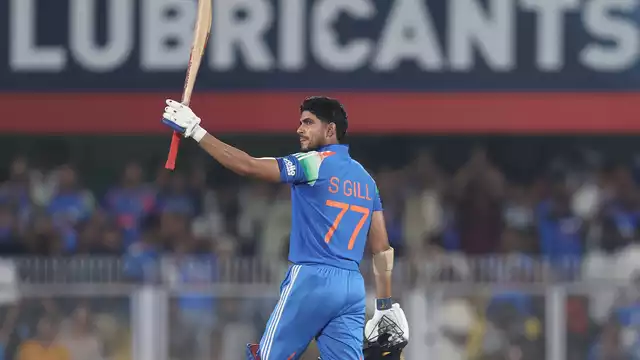
Shubman Gill anchored the chase with an unbeaten 223, the third-highest individual score in ODI history. Gill reached his double century in just 117 balls, setting a new record for the fastest ODI double ton, eclipsing Ishan Kishan’s 126-ball effort against Bangladesh in Chattogram. Furthermore, Gill became the second batter to score a double century in an ODI chase—following Glenn Maxwell’s 201 against Afghanistan—and the first captain to achieve double hundreds in both Test and ODI cricket. 223* by Gill is the third highest individual score in ODI cricket after Rohit Sharma’s 264 against Sri Lanka in 2014 and Martin Guptill’s unbeaten 237 against West Indies in World Cup 2015. Note: Netherlands win against West Indies in Harare came in a Super Over. 2 Gill became the second batter to score a double in chases in ODIs after Glenn Maxwell, who made an unbeaten 201 against Afghanistan at the Wankhede in World Cup 2023. Surpassing Soumya Sarkar’s unbeaten 208 in Dhaka Premier League in 2019, gill’s 223* is the highest ever in a run chase in all List A cricket. Overall, 117 balls makes it the joint fourth fastest double hundred in all List A cricket (where balls details are available). 1 Gill became the first captain to register double hundreds in both Tests as well as ODIs – following his 269 against England in Birmingham last year.
Rohit Sharma also reached a significant career milestone during the match, becoming the seventh batter to surpass 12,000 ODI runs. He accomplished this feat in 282 innings, the second-quickest behind Virat Kohli. The opening partnership between Sharma and Gill totaled 255 runs, setting a record for the highest partnership for any wicket in an Indian run chase and the highest against the West Indies in ODIs.
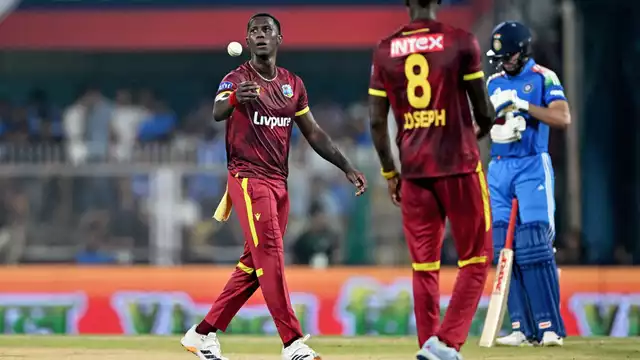
Despite the loss, the West Indies posted their highest-ever ODI total of 405/7, surpassing the 389 they scored against England in 2019. Notably, the visitors became the first team to lose three ODIs after posting scores of 370 or more. The innings featured centuries from John Campbell, Shai Hope, and Amir Jangoo—the sixth such instance of three teammates scoring hundreds in a single ODI innings.
The match also saw five individual centuries scored in total, the first such occurrence in an ODI, eclipsing the previous record of four. The only other occurrence of five centuries in a List A game was between Baroda and Hyderabad in the 2025 Vijay Hazare Trophy.
Bowler Kuldeep Yadav etched his name into the record books by becoming the first left-arm wrist spinner to reach 200 ODI wickets. Dismissing Keemo Paul in his final over, Kuldeep achieved the milestone in 123 matches—the second-fastest for an Indian bowler after Mohammed Shami—and required 6,319 deliveries to reach the mark.
This historic chase ranks as the second-highest in ODI history, trailing only South Africa’s iconic 435-run pursuit against Australia at the Wanderers in 2006. The highest remains 872 in Johannesburg in 2006 followed by 825 between India and Sri Lanka in Rajkot in 2009.