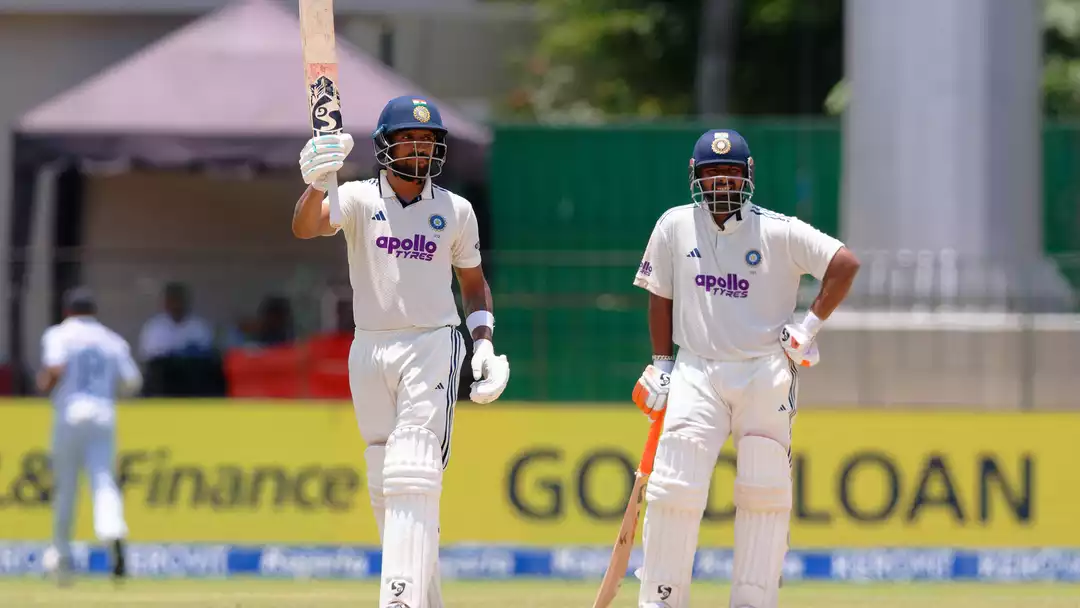
Sri Lanka’s hopes of quickly dismissing the Indian tail on the second morning of the Colombo Test were dashed when Rishabh Pant returned to the crease. Despite suffering a hand injury that forced him to retire hurt on Sunday, and with Sri Lanka bowling coach Ryan van Niekerk anticipating a 50-50 chance of his return, Pant joined Dhruv Jurel just 11 balls into the session. His presence was a testament to his resilience, reminiscent of his determined performance at Old Trafford last year when he batted through a foot injury. While the Colombo incident was less severe, it set the stage for a compelling battle between the Sri Lankan attack and the Indian wicketkeeper-batter.
As the morning progressed, the game centered on the duel between Pant and the Sri Lankan bowlers. While the hosts focused their tactical efforts on containing Pant’s aggressive, high-scoring approach, Jurel operated with quiet efficiency at the other end. The pair has become a formidable challenge for international bowling units; where a Pant innings is defined by anticipation and explosive energy, Jurel’s batting is characterized by a stealthy, methodical accumulation of runs that often leaves opponents scrambling to adjust.
Jurel has evolved into a vital luxury for the Indian Test side, effectively forcing his way into the XI as a specialist batter. In the Colombo Test, he stood out as one of only three Indian players to face more than 100 deliveries. His technical discipline was evident in his control percentage of 91.6, significantly higher than Pant’s 84.3, and his false-shot percentage of 8.4 was second only to captain Shubman Gill. This reliability at the No. 6 position provides India with a crucial cushion, whether they are looking to build massive totals at home or stabilize the innings in challenging overseas conditions.
Former batting coach Vikram Rathour, who oversaw Jurel’s integration into the side in February 2024, describes him as a “perfectionist.” His breakthrough 90-run knock on a low-bouncing Ranchi surface highlighted his temperament, a trait further refined through consistent work in the nets. Rathour notes that Jurel possesses a rare, solid technique in an era often dominated by the pursuit of aggressive shot-making. Even when he performs well, Jurel remains self-critical, frequently seeking extra sessions to address perceived flaws that are often invisible to observers.
Sri Lanka has felt the impact of this discipline twice in recent weeks. Following a brisk half-century in Galle, Jurel anchored the innings in Colombo, eventually reaching his second Test century. His performance against spin was particularly impressive; he faced 101 deliveries of spin, scoring 56 runs with a control percentage of nearly 90. He defended adeptly against Keshara Nuwantha and Prabath Jayasuriya, showing composure even as the pitch conditions deteriorated, with nearly 50% of deliveries on Day 2 showing significant deviation.
The Sri Lankan pacers attempted to rattle him with short-pitched bowling, but after seven bouncers yielded 15 runs without a dismissal opportunity, they abandoned the tactic. Jurel’s path to the national side was paved by consistent performances on A-tours, including notable runs in Australia in 2024 and England in 2025, as well as a critical 34-run contribution during a memorable win at The Oval. By the time Pant returned from injury for the home series against South Africa, Jurel had made himself indispensable. India’s transition from choosing between the two keepers to playing both has significantly strengthened their batting depth. The report also notes that sri Lanka perhaps went to bed on Day 1 of the Colombo Test assuming they had already seen the last of Rishabh Pant for the first innings. The report also notes that among them, his false-shot percentage of 8.4 is bettered only by Shubman Gill’s 6.2, although the Indian captain faced 69 fewer deliveries. The report also notes that this is, after all, the same player who came down a flight of stairs to awe and applause from the Old Trafford crowd last year. The report also notes that bowling lines switched and the short balls kept coming, fields changed. The report also notes that even copping a bouncer on the shoulder, he took them all on like only he does. The report also notes that he put plenty of them away for runs too.