When Daniel Vettori reached out to Varun Aaron, the former Indian fast bowler was not actively seeking a coaching position. Having retired from the game earlier in 2025 at the age of 35, Aaron was enjoying his time as a broadcaster. Coaching had never been a fixed objective, although he had gained years of informal experience, frequently offering technical advice to teammates and friends during his playing days, including his time representing Jharkhand.
Reflecting on his journey, Aaron noted that his own history with physical setbacks served as a primary teacher. After making his Ranji Trophy debut in the 2008/09 season, he endured three stress fractures in his back. Similar challenges occurred after he earned his Test call-up, resulting in a three-year gap between his first appearance in 2011 and his second in 2014. These injuries forced him to analyze his own mechanics deeply, making the transition to mentoring feel like a natural extension of his career.
Aaron never mapped out a post-retirement plan. He stated that he was not setting specific targets or deciding between coaching and commentary. His priority after stepping away from the professional circuit was simply to enjoy his post-playing life, allowing new opportunities to emerge organically. In addition to his recent IPL debut as a coach, he has accepted a role as bowling coach for the Glasgow Cosmics in the inaugural European T20 Premier League while continuing his commentary work.
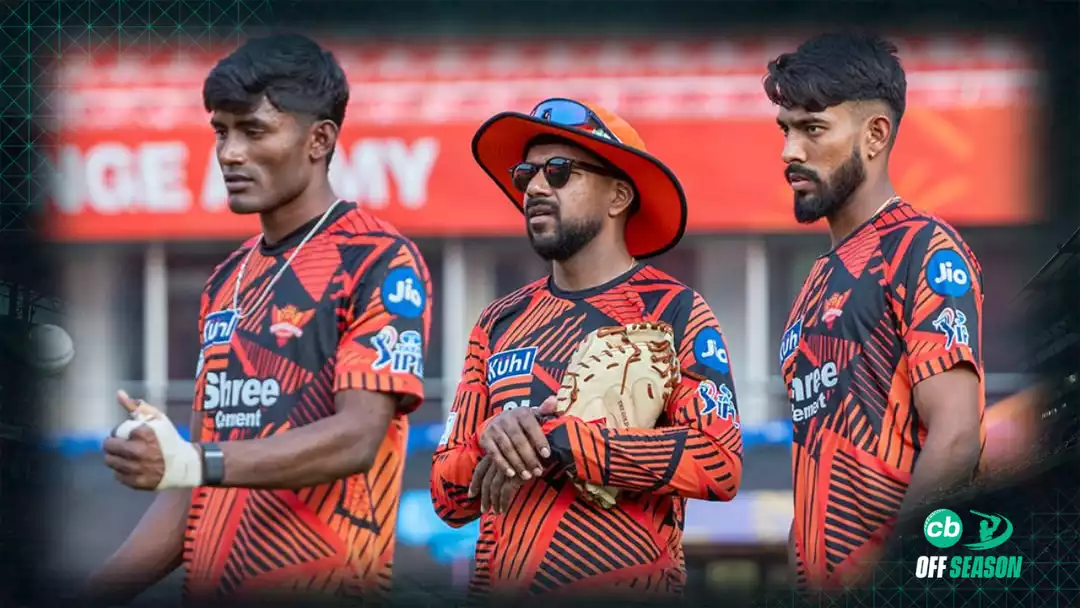
In his first season as an IPL coach, Aaron was given significant influence over the Sunrisers’ auction strategy. He identified young prospects like Praful Hinge and Sakib Hussain, focusing on their latent potential rather than their current statistics. His foresight paid off when both bowlers made immediate impacts, each securing four-wicket hauls in their debut IPL match against the Rajasthan Royals.
Aaron’s coaching process often required him to balance his technical duties with broadcasting commitments for the T20 World Cup. He frequently traveled between cities, managing television appearances in the morning and training sessions in the evening. To ensure his instructions were followed precisely, he relied on his former Jharkhand teammate, SS Rao, whom he trusts implicitly to implement his specific training plans for the bowlers.
The young bowling contingent also featured promising talents like Shivang Kumar, who Aaron described as unbelievable, and Onkar Tarmale, whose progress was temporarily halted by an injury. Aaron emphasized that his role was made significantly easier by the empowerment granted to him by head coach Vettori and franchise owner Kavya Maran. Their support, which included funding for advanced equipment and training camps, allowed him a level of operational freedom rarely seen in a first-year tenure.
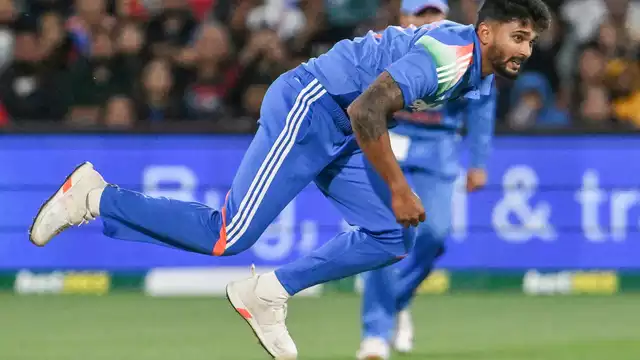
At the core of Aaron’s philosophy is the belief that fast bowling should be kept simple. He observed that players often overcomplicate their approach by attempting too many variations. Instead, he focuses on individual assessment, identifying what makes a bowler unique and amplifying those specific strengths while addressing limitations. He believes that every bowler is distinct, and effective coaching requires understanding the reasoning behind both successful and unsuccessful performances rather than just looking at the final results.
Aaron actively encourages his bowlers to develop their own analytical skills rather than relying solely on his guidance. He maintains that if a bowler understands why a performance was successful, they are better equipped to replicate it. His experience continues to inform his approach, recognizing that while speed is a major point of interest—referencing his own 153kph delivery during the 2010/11 Vijay Hazare Trophy—fast bowling is ultimately about timing and rhythm.
Balancing these various responsibilities has come with personal sacrifices, as he admits to spending little time at home, a fact he jokingly notes his girlfriend finds challenging. However, he finds the intersection of broadcasting and coaching mutually beneficial, as watching players across different competitions enhances his understanding of the modern game. For Aaron, guiding the next generation of quicks is currently one of the most rewarding aspects of his life. The report also notes that i think I’ve coached myself quite a bit because of the amount of injuries I’ve had,” Aaron reflects in a chat with. “And I’ve helped out a lot of friends. The report also notes that so coaching was something which was always ongoing. The report also notes that and I enjoyed just helping another person and making that impact, people would ask me for their views on their bowling. The report also notes that there had been some more structured work too. The report also notes that with Aaron designing and executing the facility, protocols and programme, as well as the redevelopment of the ground and gym, in a way giving back to an academy he spent years in, the new MRF Pace Foundation High Performance Center was his brainchild. The report also notes that he later worked with the Jharkhand State Cricket Association as a bowling consultant. The report also notes that i was not thinking, ‘I want to coach, I want to commentate.