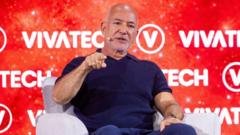
Jeff Bezos founded Amazon in a garage in Seattle in 1994, and now, the fourth-richest man in the world is trying to buy a stake in your club. Surely that has to be good news for the future of the team? Yet Liverpool fans, who still bear the scars of the Tom Hicks and George Gillette era, are viewing the potential high-profile investment cautiously. With scant information about the group’s plans or long-term intentions, supporters have cause for caution. Liverpool fans consider the club to have a specific set of values, centred around its working-class roots.
The man in question is billionaire Amazon founder Jeff Bezos, who is part of a consortium that is in advanced talks to buy a 30% stake in the club. Bezos, according to Forbes, has a personal fortune of about $257bn (£190bn). To put that into context, last year Liverpool announced record revenues of £703m – but Bezos is worth 270 times that. Then there is Amit Bhatia, who had been a director and co-owner of Queens Park Rangers for the last 18 years until he relinquished his ownership stake in the Championship club on 21 July.
When FSG bought Liverpool for £300m in 2010 the club were, according to CEO Billy Hogan, “literally on the brink of bankruptcy”. On top of the purchase price, FSG have since facilitated intra-group loans of about £218m, meaning a total outlay of about £518m. Sixteen years later, the proposed sale of 30% would mean FSG received £1.35bn, with the club valued at £4.5bn – 13 times what it was worth in 2010 when FSG bought it from Hicks and Gillette.
“It’s a great deal for FSG,” football finance expert Kieran Maguire said Sport. “They generate more than £1bn from the deal and still keep control – this represents the best of both worlds.” Maguire added: “This follows the approach of City Football Group of letting in minority investors to recoup the original purchase price and more. If Bezos et al like the kudos and attention that part owning as big a brand as Liverpool brings, then a full acquisition becomes a possibility, if the price is right.”
Such a huge increase in Liverpool’s value has required investment off the pitch as well as success on it. A 30-year title drought was ended in 2019-20, another Premier League was won in 2024-25 and a sixth Champions League was claimed in 2018-19. This is not the first time outside money has been accepted by FSG, with global sports investment firm Dynasty Equity purchasing 3% for an undisclosed amount in 2023.
But even if the minority investment goes through, the Premier League’s Squad Cost Ratio financial rules mean the influx of cash will not necessarily translate to a transfer market war chest. Funds to spend on transfers are directly related to income generated via commercial activities rather than an owner’s personal wealth. “The deal could be a straight share sale by FSG to the new group, in which case there would be no financial injection into the club at all. It’s as simple as that,” Maguire noted.
Jeff Bezos has been linked with potential investments in several sports teams in recent years, but Liverpool represents a unique opportunity. Bezos stepped down as CEO of Amazon five years ago but remains one of the company’s biggest shareholders. He also owns aerospace company Blue Origin, venture capital firm Nash Holdings and the Washington Post. As if to underline the scale of his financial resources, only last week he filed to sell 15 million of his Amazon shares.
Bezos has been linked with sports investment for some time, but usually American sports franchises which are domestic in nature. He was reportedly interested in the Seattle Seahawks, who were sold for £7.3bn recently. Buying a stake in Liverpool would give the 62-year-old a slice of one of the most iconic global sports brands. But would Liverpool be a status symbol or a true investment? It is not as if Liverpool are unknown in the United States, either. Research company GWI has reported that Liverpool is one of the most supported teams in the US.
It is no surprise, then, that the Reds had their pre-season tour in the States. The deal would continue a theme of US investment into the Premier League, with 11 of the 20 teams this season having some form of American ownership. That is not to mention Ryan Reynolds and Rob McElhenney at Wrexham, and Tom Brady’s involvement at Birmingham City. US money continues to pour into the English game, driven by the prestige and the global reach of the Premier League.
FSG bought into Liverpool at the most opportune time, with the club struggling financially. But even at this point, Hogan says there is “a huge opportunity still” to invest in “the biggest and most iconic club in world football”. The potential involvement of figures like Facebook co-founder Eduardo Saverin, who is reported to be involved in the consortium, highlights the high-level interest in the club’s future trajectory.
Ultimately, while the investment would give Liverpool some very wealthy new co-owners, it would not necessarily make a marked difference to their spending power. The financial regulations governing the Premier League are designed to prevent the kind of reckless spending that once plagued the sport. Consequently, the impact of such an investment is more likely to be felt in the boardroom and the club’s commercial strategy rather than on the pitch.
As the talks progress, the focus remains on how this partnership will align with the club’s long-term sustainability. For the fans, the priority is ensuring that the club’s identity remains intact despite the influx of billionaire capital. The coming months will likely reveal whether this consortium is merely looking for a prestigious asset or if they have a genuine desire to build upon the legacy that FSG has cultivated since 2010.
More recently he created Prometheus, an artificial intelligence company which last month invested £330m in a British AI start-up.
The Washington Commanders, another NFL franchise said to be of interest, were sold for £4.6bn in 2023.
Research company GWI has reported that Liverpool have 26 million supporters in the US, and the fastest-growing fan base.
Facebook co-founder Eduardo Saverin, who is reported to be worth $32bn (£23.7bn), is also involved is the consortium.
When FSG attempted to raise season ticket prices last season, fans’ group Spirit of Shankly (SOS) launched a campaign called ‘Not a Pound in the Ground’.
It urged fans to buy food and drink from local businesses in the Anfield area rather than inside the stadium.
It worked, forcing the club to cut the size of their planned price rise.
SOS has doubts about the proposed investment and has raised a number of concerns.
“We would like to know what the buying consortium will get in return for their 30% stake,” an SOS spokesperson said Sport.
SOS’ ethos is in contrast to the concerns that have been raised over the way Amazon workers have been treated.
A Trades Union Congress report, external issued in 2020 highlighted “long, gruelling shifts with unreasonable productivity targets and unfair shift patterns” and “unacceptable working conditions”.
In 2024, more than 200 workers took part in two days of strike action at the Amazon site in Birmingham as part of a long-running dispute over pay and union rights.
Amazon said it regularly reviews its pay to ensure it offers competitive wages.
In February this year, the Washington Post announced it would be laying off one-third of its work force, sharply scaling back the paper’s coverage of sports and foreign news.
Gareth Roberts, Liverpool season ticket holder and host of the Late Challenge LFC podcast, said Sport he had concerns.
“How Amazon have treated unions and workers isn’t particularly palatable,” Roberts said.
“Is he simply going to ramp up the name of Liverpool in order to make as much money as possible?”
The painful experience of the Hicks-Gillette ownership endures, hence the reluctance to throw support behind this possible new investment without more information.
“People wonder why Liverpool fans do scrutinise things like this so much,” Roberts added.
“We want the club to be run well, we want the club to be run sustainably and we want people to care about it and to care about the fans.
The Bezos factor – unpicking puzzle of Liverpool’s potential investors Published 22 July
‘Bezos deal distances me further from the club’ – fan views Published 1 day ago
‘Bezos deal distances me further from the club’ – fan views
Latest Liverpool news, analysis and fan views
Ask about Liverpool – what do you want to know?