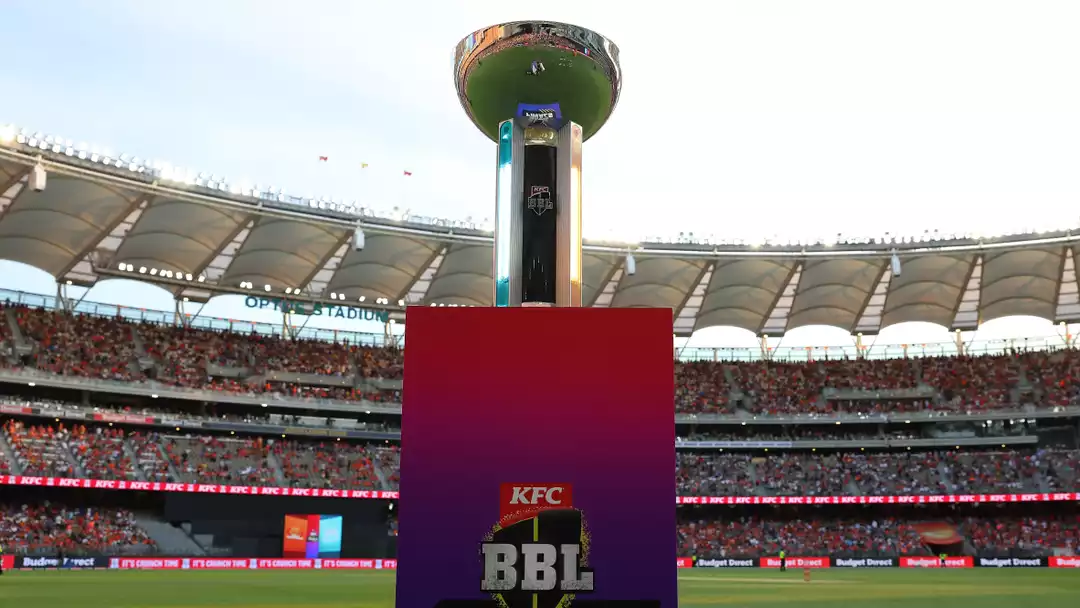
Cricket Australia (CA) is actively seeking private investment for its Big Bash League (BBL) franchises, a move that has drawn interest from several Indian Premier League (IPL) team owners. While CA has engaged the Raine Group—the merchant bank that facilitated the sale of The Hundred franchises in England—to oversee the process, the road to privatization is proving far more complex than the “billion-dollar opportunity” described by CA CEO Todd Greenberg.
Currently, the Melbourne Renegades are the only team available for a 100 percent acquisition, with CA managing the sale directly rather than through Cricket Victoria. Prospective buyers face the challenge of building a brand-new team without an established fan base. For other franchises, such as the Hobart Hurricanes and Perth Scorchers, future sales are expected to be capped at a 49 percent stake. This limitation is a significant point of contention, as IPL owners are accustomed to full control in leagues like the SA20, ILT20, CPL, and MLC. Even in cases like The Hundred, where IPL entities own 49 percent of teams like MI London and Southern Brave, they maintain operational control, a luxury CA appears unwilling to grant.
CA Chairman Mike Baird has emphasized that the governing body and its members intend to retain authority over critical operations, including international scheduling, salary caps, branding, and the approval of investors. This stance has created friction; for instance, the Delhi Capitals co-owners previously explored potential investments in Sydney and Cricket New South Wales, but internal disagreements within the Australian cricket establishment regarding private equity have complicated these prospects.
A major hurdle for potential investors is the lack of guaranteed star player availability. Unlike the BCCI, which ensures marquee players like MS Dhoni, Virat Kohli, Rohit Sharma, and Jasprit Bumrah are available for the IPL, CA does not clear the BBL window of international cricket. The disparity is stark: since 2016, Pat Cummins has played 76 IPL matches but only seven BBL games. Furthermore, high Australian taxation and significant travel times—with some journeys to Perth lasting five to six hours—make the league less attractive compared to the more compact logistics of the SA20 or UAE-based leagues.
The current media rights landscape also adds uncertainty, as CA is only three years into a seven-year deal. Additionally, investors are closely monitoring the influence of the Australian Cricketers Association (ACA). Despite these challenges, the fact that most BBL teams are reportedly profitable remains a key incentive for IPL owners, who are looking to expand their global footprint.
Ultimately, the success of this privatization project hinges on whether CA can offer more flexible terms to satisfy prospective buyers. As one IPL insider noted, the negotiation process is proving difficult, with the sentiment being that while the ECB was a tough negotiator, CA is five times more challenging. To realize the promised billion-dollar potential, CA may need to reconsider its rigid stance on control and player participation. The report also notes that but has it got them seriously excited. The report also notes that but the usual suspects in the IPL ecosystem are believed to be among those considering the opportunity, it did not go into specifics. The report also notes that none of them, however, has confirmed their interest, approached by. The report also notes that wACA is yet to call a meeting of the general body to take a view of the members on divestment but that is an internal matter. The report also notes that the vexing issue is the future sale will be limited only to 49 per cent. The report also notes that while LSG owner Sanjiv Goenka’s RPSG Group has acquired a 70 per cent stake in Manchester Super Giants, the Sun Group-owned SRH has a 100 per cent stake in Sunrisers Leeds. The report also notes that gMR, incidentally, also owns Hampshire County.